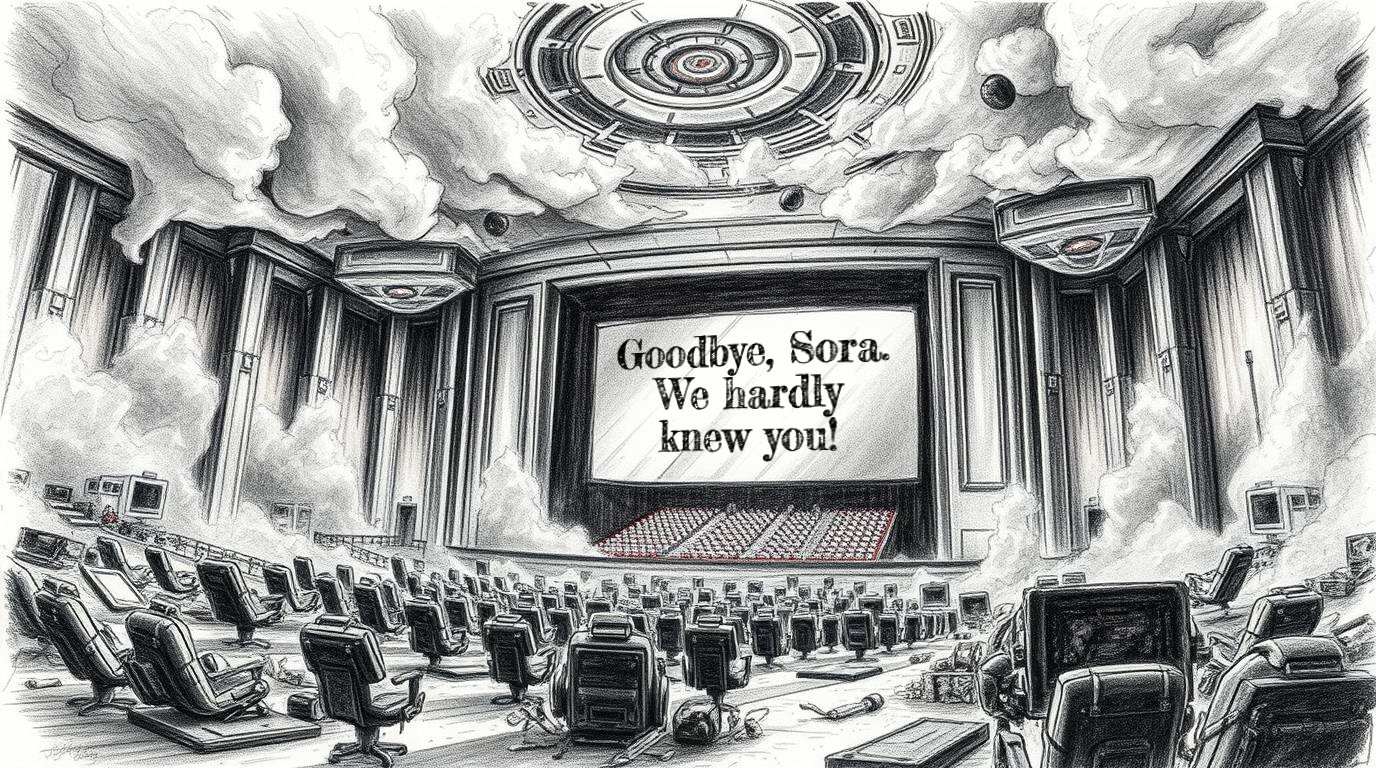
A portion of the artificial intelligence boom seems to be fading, as OpenAI has canceled Sora, its video-generation tool, not long after entering into a celebrated licensing arrangement with Disney and launching a new app. Along with this, OpenAI is withdrawing video features and animation interfaces from ChatGPT, making way for an unnamed upcoming model called “Spud,” which supposedly promises economic improvement though specifics are unclear. These sudden shifts left Disney, which committed billions in a joint venture, unprepared and forced to adjust quickly when the partnership’s cancellation was publicly announced, though Disney remains open to future A.I. collaborations.
This string of swift reversals, following heavy publicity and substantial agreements, highlights OpenAI’s fragile circumstances as it prepares for an initial public offering where its finances will face scrutiny. The situation mirrors broader instability across the artificial intelligence sector, posing a risk to the national economy, as this field’s stumbles could trigger deeper economic troubles. Other high-profile partnerships and technology investments are also being scaled back or abandoned, such as a major Oracle and SoftBank data facility, Nvidia’s supply of computing equipment, and pilot programs with Walmart and Figure AI, all showing declining confidence in OpenAI’s direction.
Within the company, leadership declared a state of emergency late last year, prompting a pivot away from experimental features toward refining products that consistently generate income. Video tools, now viewed as superfluous, have seen plummeting user interest, prompting a drop in resource allocation. These measures signal OpenAI’s attempt to present itself as a reliable technology provider with concrete financial potential ahead of going public, especially as competing organizations achieve better results by targeting business-oriented applications instead of risky consumer-facing visuals, which raise legal and ethical issues.
OpenAI’s retreat from earlier exuberant launches such as Dall-E and GPT Pro, often seen as lacking practical value, illustrates the industry’s move toward projects that withstand professional scrutiny and avoid copyright or misuse headaches. With major technology investments paused and growth ambitions scaled back, the current landscape points to a technology bubble that faces increasing pressure and uncertainty.
The ainewsarticles.com article you just read is a brief synopsis; the original article can be found here: Read the Full Article…