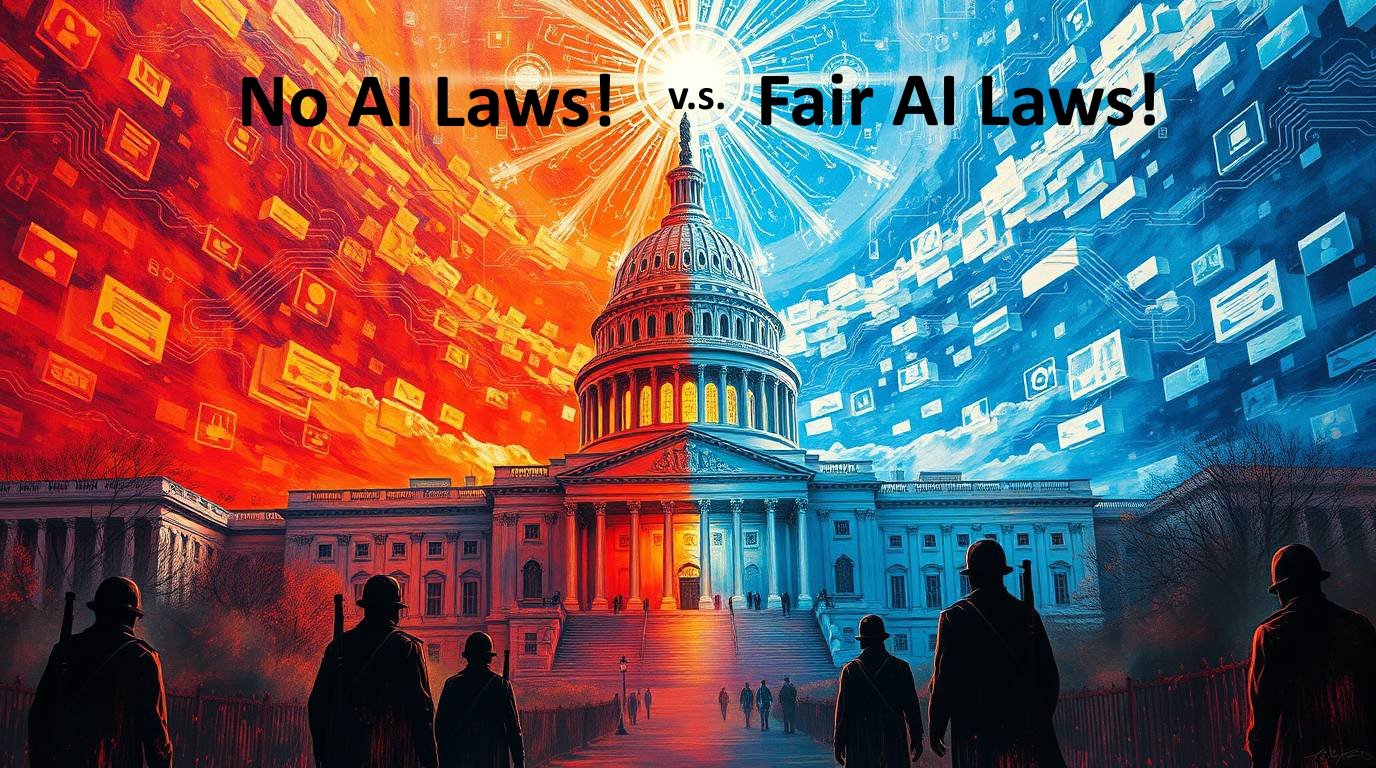
President Donald Trump signed an executive order that requires federal agencies to challenge state regulations regarding artificial intelligence, arguing that startups need consistency across the board. Experts and business leaders worry that this could create ongoing uncertainty, leading to legal issues that force new companies to deal with changing state rules while waiting for Congress to develop a unified national policy. The directive, titled “Ensuring a National Policy Framework for Artificial Intelligence,” demands the Department of Justice to form a task force within 30 days to contest certain state laws on the grounds that AI falls under interstate commerce that needs federal control. Additionally, the Commerce Department has 90 days to identify burdensome state regulations, which could affect states’ access to federal funding, including for broadband projects.
The order encourages the Federal Trade Commission and the Federal Communications Commission to review federal standards that might override state regulations and calls on the administration to work with Congress on a solid AI law. Critics argue that the move favors big tech interests in Silicon Valley, highlighting the absence of a clear national framework despite its intentions. As it stands, state laws remain enforceable unless overturned, prolonging challenges in the transition for startups. Sean Fitzpatrick, CEO of LexisNexis North America, warns about a potential rise in legal disputes, possibly reaching the Supreme Court, as states maintain their right to protect consumers. While some believe that a centralized regulatory effort in Washington could reduce uncertainty, others feel that the resulting conflicts between state and federal obligations may ultimately burden startups, especially those with limited resources.
Legal experts are calling for a unified national standard but suggest that an executive order may not be the best approach to challenge existing state laws. The ongoing confusion could lead to strict regulatory measures that favor larger technology companies, and advocates like Morgan Reed emphasize the necessity for swift Congressional action to create a clear, risk-sensitive national AI framework to avoid fragmented regulations and lasting legal entanglements.
The ainewsarticles.com article you just read is a brief synopsis; the original article can be found here: Read the Full Article…